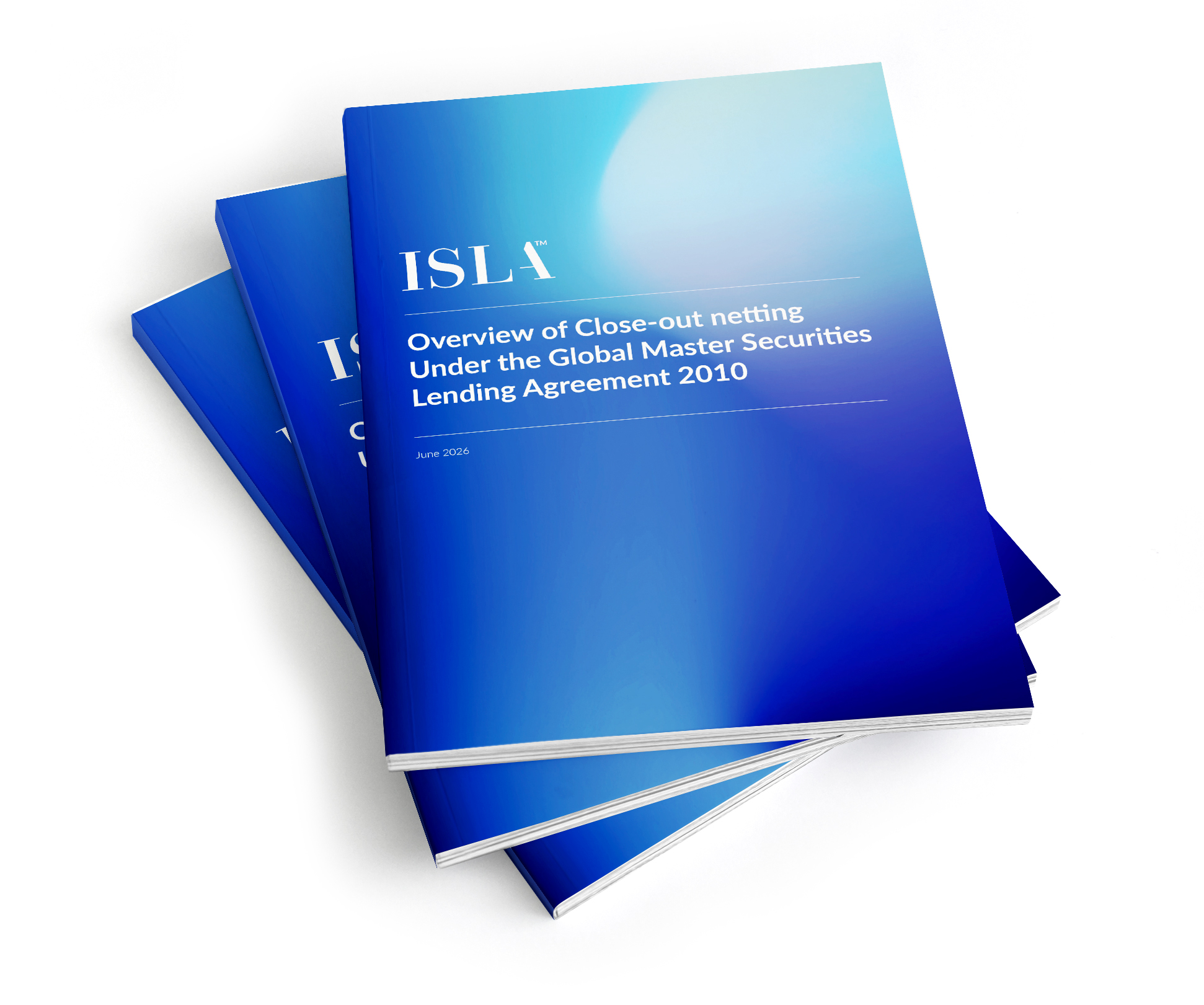
ISLA is pleased to announce the publication of a new paper exploring the application of close-out netting under the GMSLA 2010.
As the legal bedrock of the securities lending market, the GMSLA’s resilience is most critical during times of market stress or counterparty default. “Overview of Close-Out Netting Under the Global Master Securities Lending Agreement 2010” provides a high-level explanation of how the GMSLA manages these events through the mechanics of termination, valuation, and close-out netting.
Key Topics Covered in the Paper Include:
- The Mechanics of Default: A step-by-step walkthrough of the termination and cash settlement process following an Event of Default.
- Netting vs. Gross Obligations: Simple worked examples demonstrating how effective close-out netting protects market participants by offsetting mutual obligations, compared to the risks inherent in gross settlement.
- Regulatory & Operational Benefits: Insight into how ISLA’s netting opinions enable firms to optimise regulatory capital, manage leverage, and reduce operational friction.
Tina Baker, Head of Legal Services, “We are pleased to publish this paper which has been developed as an educational guide, providing market participants with a high-level overview of the GMSLA close-out framework. These mechanics provide the protection and resilience needed to mitigate counterparty credit risk, in an increasingly complex landscape.”
The paper is intended to provide a foundational understanding of close-out netting for market participants who may be unfamiliar with the GMSLA. While it has been developed with input from and additional review by ISLA’s external counsel partners, it does not constitute legal advice, nor should it be relied upon as such.
The Role of ISLA Netting Opinions
ISLA provides comprehensive legal opinions covering the enforceability of netting provisions across over 71 jurisdictions. These opinions give banking organisations the legal certainty required to recognise the risk-reducing benefits of standard securities lending transactions within their regulatory capital calculations while operating under modern banking regulations
We invite you to read the full paper to better understand the fundamentals of the GMSLA close-out process and its role in maintaining a safe, efficient, and competitive global market.